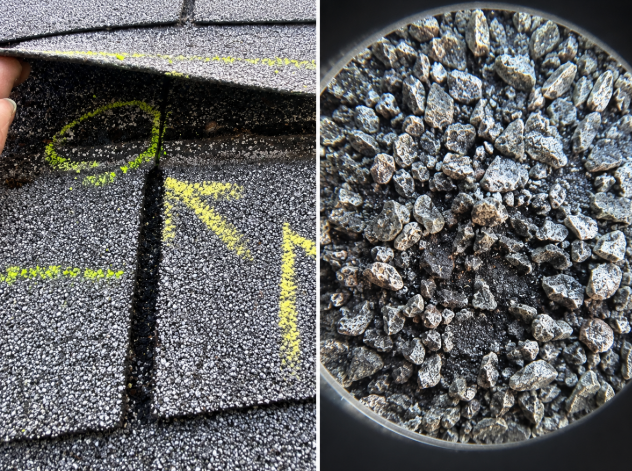
A roof doesn’t fail all at once. Long before a leak shows up on the ceiling or a section of shingles blows off in a storm, most roofs give off small, easy-to-miss signals that something underneath is starting to go wrong. The problem is that these signals rarely look urgent. They look like a little discoloration, a slightly uneven patch, a shingle edge that’s curled up a bit more than the others — the kind of thing that’s simple to walk past a hundred times without ever really seeing it. Learning to notice what a roof is quietly saying can be the difference between a routine repair and a much bigger, much more expensive problem.
What Granule Loss and Curling Are Really Telling You
Granule loss is one of the clearest early warnings a roof can give, and it’s also one of the most overlooked. Those small granules on the surface of an asphalt shingle protect the asphalt layer underneath from direct sun and help the shingle shed water properly. When they start wearing away, homeowners often don’t notice the shingles themselves — they notice a gritty buildup collecting in the gutters or piling up near downspouts after a rain. That buildup is the roof telling you its protective layer is thinning out.
Curling shingle edges send a similar message. As asphalt shingles age and lose flexibility, they stop lying flat, and the edges or corners begin to lift or cup instead of sitting tight against the roof deck. From the ground, a few curled shingles can look like a minor cosmetic issue. Up close, they’re a sign that wind-driven rain has an easier path underneath the shingle than it used to, even if no leak has shown up yet.
The Signs That Show Up Inside the House
Not every warning sign is visible from the driveway. Some of the most important ones show up inside the attic or on the ceiling below, and they’re easy to dismiss if you don’t know what you’re looking at. A faint water stain on a ceiling or in a corner of the attic doesn’t always mean an active, obvious leak — sometimes it’s the result of a small amount of moisture getting in during heavy rain or snowmelt and slowly drying out between events, leaving a stain behind as the only evidence. A musty smell in the attic, visible mold on the underside of the roof deck, or insulation that feels damp or matted down are all signs that moisture is finding its way in somewhere, even if no one has spotted a drip.
Sagging is another signal worth taking seriously the moment it’s noticed. A roofline that isn’t perfectly straight, or a spot on the roof deck that feels slightly soft or spongy when walked on, can point to structural issues developing underneath — often the result of water damage that’s been building for a while. Unlike granule loss or curling, sagging isn’t something to wait on. It’s usually a sign the damage has already moved past the surface and into the structure itself.
Why These Signs Are Easy to Miss — and Why That’s the Problem
Most of these warning signs share one thing in common: none of them look dramatic. A roof rarely announces itself with a dramatic collapse out of nowhere. Instead, it tends to send out small, quiet signals for months or even years before a problem becomes obvious from inside the house. The homeowners who catch these issues early are almost never the ones who happened to notice something themselves — they’re the ones who had a trained eye look at the roof before there was an obvious reason to.
That’s really the core of the problem with reading a roof’s own warning signs: by the time an untrained eye can spot them clearly from the ground, the roof has usually been dealing with the underlying issue for a lot longer than it looks. Granule loss, curling, staining, and soft spots are all easier to catch — and far cheaper to address — when someone who knows what to look for gets up close on a regular basis, rather than waiting for a leak to force the issue.
If it’s been a while since anyone actually looked closely at your roof, there’s a good chance it’s been trying to tell you something. Top Pro Restoration LLC provides free roof inspections for homeowners throughout New York, checking for the early warning signs that are easy to miss from the ground and giving you an honest, no-pressure read on your roof’s condition.
Schedule your free roof inspection today and find out what your roof has been trying to say.
#RoofInspection #RoofDamage #RoofMaintenance #ShingleDamage #GranuleLoss #RoofLeaks #RoofingContractor #NewYorkRoofing #FreeInspection #TopProRestoration