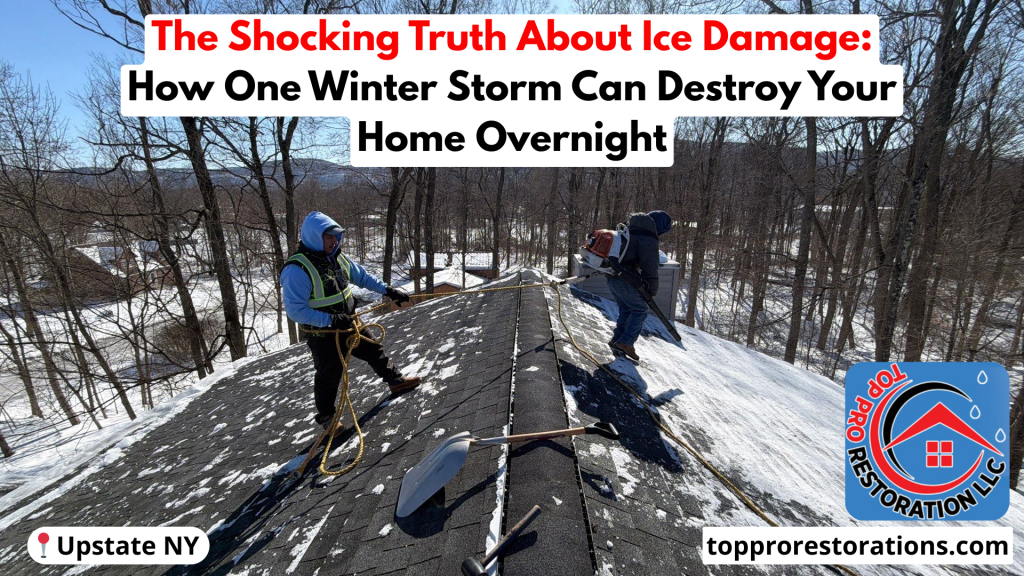
When temperatures plummet, your home becomes a battleground. Ice doesn’t just look dangerous — it is dangerous. And by the time you see visible damage, the destruction may already be costing you thousands.
Every winter, homeowners underestimate ice damage… until it’s too late.
In this comprehensive guide, we’ll uncover:
What ice damage really does to your home
The hidden warning signs most people miss
The true cost of ignoring frozen pipes and ice dams
How to prevent catastrophic winter damage
What to do immediately if your home is already affected
If you live in a cold climate, this may be the most important thing you read all season.
What Is Ice Damage — And Why Is It So Destructive?
Ice damage occurs when freezing temperatures cause water to expand inside or around your home. That expansion creates intense pressure — enough to crack pipes, split roofing materials, shift gutters, damage siding, and compromise structural integrity.
Water expands by nearly 9% when it freezes. That might not sound like much — but inside confined spaces like pipes, walls, and roof decking, it’s devastating.
The Most Common Types of Ice Damage
Frozen and burst pipes
Ice dams on roofs
Gutter separation and collapse
Roof shingle lifting and water intrusion
Foundation cracks from freeze-thaw cycles
Siding and exterior surface damage
Interior flooding and mold growth
And the scariest part? Much of this damage starts silently.
Ice Dams: The Silent Roof Destroyer
Ice dams form when heat escapes through your roof, melting snow. The water runs down and refreezes at the colder roof edge, forming a thick ridge of ice. That ridge blocks drainage, forcing water back under shingles and into your attic.
Warning Signs of Ice Dams
Icicles hanging from gutters
Water stains on ceilings
Peeling paint near rooflines
Sagging gutters
Wet insulation in the attic
Left untreated, ice dams can lead to:
Mold infestation
Rotting roof decking
Structural weakening
Full roof replacement
Prevention starts with proper attic insulation, ventilation, and professional ice removal.
Frozen Pipes: A Disaster Waiting to Happen
When temperatures drop below 32°F (0°C), exposed pipes are at serious risk. Pipes in basements, crawl spaces, garages, and exterior walls are especially vulnerable.
What Happens When Pipes Freeze?
- Water freezes inside the pipe
Pressure builds between the blockage and faucet
The pipe bursts
Water floods your home once temperatures rise
A single burst pipe can release hundreds of gallons of water in hours.
Signs Your Pipes May Be Frozen
Reduced water flow
Frost visible on pipes
Strange odors from drains
Unusual sounds when turning on faucets
Immediate action can prevent catastrophic water damage.
The Real Cost of Ignoring Ice Damage
Many homeowners delay repairs because the damage “doesn’t look that bad.”
Here’s what that can lead to:
$5,000–$15,000 in water damage repairs
Structural framing replacement
Mold remediation expenses
Insurance claim complications
Decreased property value
Ice damage spreads fast — especially when hidden inside walls and ceilings.
How to Prevent Ice Damage Before It Starts
Prevention is always cheaper than restoration. Here’s what experts recommend:
1. Insulate and Seal Your Home
Add attic insulation
Seal air leaks around vents and chimneys
Insulate exposed pipes
2. Keep Gutters Clear
Clogged gutters trap water, increasing ice formation risk.
3. Maintain Proper Attic Ventilation
Balanced airflow prevents uneven roof temperatures that create ice dams.
4. Let Faucets Drip During Extreme Cold
Moving water is less likely to freeze.
5. Schedule a Winter Home Inspection
Professional inspections identify vulnerabilities before a storm hits.
What To Do If You Already Have Ice Damage
If you suspect damage:
Shut off your water supply (if pipes burst)
Avoid climbing onto icy roofs
Document visible damage for insurance
Contact a professional restoration team immediately
Fast response reduces secondary damage like mold and structural decay.
Why Professional Ice Damage Restoration Matters
DIY fixes often miss hidden moisture behind walls, under flooring, and inside insulation.
Professional restoration services include:
Moisture detection with thermal imaging
Emergency water extraction
Structural drying
Mold prevention treatments
Roof and gutter repair
Pipe repair and insulation upgrades
The sooner restoration begins, the better the outcome.
Don’t Wait Until It’s Too Late
Ice damage doesn’t just affect old homes. It impacts new construction, renovated properties, and even well-maintained houses when temperatures plunge unexpectedly.
If you’ve noticed icicles forming, ceilings staining, or water pressure dropping — don’t ignore it.
Winter damage escalates quickly.
Protect your home. Protect your investment. Act early.